

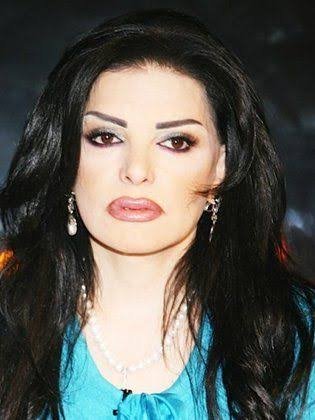
Few individuals connected to Iraq’s Ba’ath-era leadership remain as little understood as Nidal al-Hamdani. While her name frequently appears in discussions about former Iraqi President Saddam Hussein, publicly verified information about her personal life, scientific career, and later whereabouts remains remarkably limited. This lack of reliable documentation has contributed to speculation, conflicting online accounts, and repeated circulation of unverified claims.
What is supported by historical reporting is that Nidal al-Hamdani was associated with Iraq’s scientific establishment and has been widely identified in numerous historical references as a woman who became linked to Saddam Hussein during the final decades of his rule. Beyond those broad facts, however, many details remain uncertain due to the secrecy surrounding Iraq’s government before 2003 and the limited availability of official records afterward.
This article examines what is currently known about Nidal al-Hamdani, separates documented facts from speculation, explores her reported scientific career, explains the historical context in which she lived, and highlights why researchers continue to approach her biography with caution. Rather than repeating sensational claims, the goal is to provide a balanced, evidence-based overview consistent with modern journalistic standards.
Key Takeaways
- Nidal al-Hamdani is primarily known through her reported association with former Iraqi President Saddam Hussein.
- Multiple historical sources identify her as a scientist who reportedly managed Iraq’s Solar Energy Research Center.
- Much of her biography remains difficult to verify because of limited public records and the secrecy of Iraq’s government before 2003.
- Claims about her personal life, marriage, and activities after the Iraq War vary considerably between sources.
- Researchers generally distinguish between documented historical facts and information based primarily on secondary reporting.
- Her story reflects the broader challenge of documenting the lives of individuals connected to highly centralized authoritarian governments.
Background and Historical Context
Understanding Nidal al-Hamdani requires understanding Iraq during the final decades of the twentieth century.
Throughout the 1970s, 1980s, and early 2000s, Iraq invested heavily in scientific research, engineering, and higher education while simultaneously maintaining one of the world’s most tightly controlled political systems. Scientific institutions operated under significant state influence, and senior researchers often worked within organizations connected directly or indirectly to government priorities.
During this period, Iraq pursued research across multiple sectors, including:
- Renewable energy
- Agriculture
- Engineering
- Industrial development
- Medical research
- Materials science
Reports from several historical sources identify Nidal al-Hamdani as serving in a leadership position at Iraq’s Solar Energy Research Center, although publicly available documentation regarding specific projects remains limited.
Because archives were damaged, lost, or became inaccessible following the 2003 invasion of Iraq, reconstructing detailed biographies of many Iraqi scientists has proven difficult.
Who Was Nidal al-Hamdani?
Most available information portrays Nidal al-Hamdani as an educated Iraqi scientist who held an administrative leadership position within Iraq’s scientific establishment.
Numerous historical references describe her as:
- An Iraqi scientist
- General Manager of Iraq’s Solar Energy Research Center
- A senior official within Iraq’s scientific research infrastructure
- A woman reportedly connected personally to Saddam Hussein during the 1990s
Unlike many prominent political figures of the period, she rarely appeared in public media, gave few—if any—known interviews, and left behind very little publicly available documentation.
This absence of primary-source material is one reason historians remain cautious when discussing her life.
Reported Scientific Career
Although public records are limited, several historical accounts consistently identify Nidal al-Hamdani as leading Iraq’s Solar Energy Research Center.
If accurate, this would have placed her within one of Iraq’s important research organizations during a period when the country sought to diversify energy research despite economic sanctions and political instability.
Potential responsibilities for someone in such a role would likely have included:
- Managing research teams
- Coordinating government-funded scientific projects
- Overseeing technical development
- Collaborating with universities
- Supporting renewable energy initiatives
However, few detailed technical publications directly linked to her have become publicly available.
As a result, historians can acknowledge her reported leadership role while recognizing that the scope of her scientific contributions cannot currently be fully reconstructed from available evidence.
Her Reported Relationship with Saddam Hussein
The aspect of Nidal al-Hamdani’s life that attracts the greatest public attention is her reported relationship with Saddam Hussein.
Multiple historical references describe her as one of Saddam Hussein’s later wives. Several reports state that the marriage occurred around 1990, although precise documentation remains limited.
Some accounts further claim that she had previously been married and that political circumstances surrounding the marriage were unusual. These claims appear repeatedly in secondary sources but lack comprehensive official documentation.
Because Iraq’s leadership maintained extraordinary secrecy regarding private family matters, many details remain impossible to independently verify.
Responsible historical analysis therefore distinguishes between:
Widely reported
- She was reportedly married to Saddam Hussein.
- She had a scientific leadership position.
Less certain
- Personal circumstances surrounding the marriage.
- Daily life inside Saddam Hussein’s household.
- Private political influence.
This distinction is important because later internet articles often repeat earlier claims without identifying their original evidence.
Why So Little Is Known?
One of the most striking aspects of Nidal al-Hamdani’s biography is the absence of reliable documentation.
Several factors contribute to this:
Government secrecy
The Iraqi government tightly controlled information regarding senior officials and presidential family members.
Limited public appearances
Unlike many political spouses, Nidal al-Hamdani appears to have maintained a relatively low public profile.
Loss of records
The Iraq War and its aftermath resulted in significant destruction and displacement of archives.
Conflicting secondary sources
Many modern websites rely on earlier biographies without independent verification, causing the same uncertain claims to circulate repeatedly.
These limitations explain why researchers often describe her as an elusive or mysterious historical figure rather than presenting definitive biographies.
Life After 2003: What Happened?
Perhaps the greatest unanswered question concerns Nidal al-Hamdani’s life after the fall of Saddam Hussein’s government.
Numerous online articles speculate about:
- Whether she left Iraq
- Whether she lives under another identity
- Whether she withdrew entirely from public life
However, no widely accepted public evidence conclusively answers these questions.
Most reputable historical discussions simply note that her later whereabouts remain publicly unknown.
For journalists and researchers, acknowledging uncertainty is more accurate than presenting speculation as fact.
Separating Verified Information from Speculation
| Topic | Supported by Multiple Historical References | Level of Certainty |
|---|---|---|
| Iraqi scientist | Yes | Moderate |
| Leadership role in Solar Energy Research Center | Yes | Moderate |
| Reported marriage to Saddam Hussein | Yes | Moderate |
| Details of personal life | Limited | Low |
| Activities after 2003 | Very limited evidence | Low |
| Current whereabouts | No confirmed public record | Very Low |
This distinction reflects good historical practice and aligns with evidence-based reporting standards.
Historical Significance
Although Nidal al-Hamdani remains a relatively obscure figure, her story illustrates broader themes that continue to interest historians.
Women in Iraqi science
Her reported scientific leadership suggests that women occupied significant technical positions within some Iraqi research institutions.
Science under authoritarian governments
Her career also highlights the complicated relationship between scientific research and political power.
Historical documentation
The limited evidence surrounding her life demonstrates how authoritarian systems often leave incomplete public records.
Legacy of the Iraq War
The destruction and fragmentation of official archives continue to complicate historical research today.
Challenges for Researchers
Biographers studying Nidal al-Hamdani encounter several recurring challenges.
First, relatively few official Iraqi government records remain easily accessible.
Second, many English-language biographies rely heavily on one another rather than independent archival research.
Third, internet articles frequently present speculation without distinguishing it from verified historical evidence.
Good historical methodology therefore requires researchers to:
- Compare multiple independent sources.
- Distinguish primary from secondary evidence.
- Clearly identify uncertainty.
- Avoid filling information gaps with unsupported conclusions.
These practices improve the reliability of historical writing while helping readers understand the limits of available evidence.
Lessons from Her Story
Nidal al-Hamdani’s biography offers several broader lessons beyond her individual life.
It demonstrates how political systems can shape historical memory, how scientific professionals sometimes become associated with political power, and how incomplete records can create decades of uncertainty.
Her story also reminds readers that many individuals connected to major historical events remain poorly documented despite widespread public curiosity.
Rather than viewing uncertainty as a weakness, historians generally regard it as an honest reflection of available evidence.
Conclusion
Nidal al-Hamdani remains one of the more enigmatic individuals connected to modern Iraqi history. Available evidence consistently portrays her as an Iraqi scientist who reportedly held a senior position within Iraq’s Solar Energy Research Center and who has been widely identified in historical accounts as one of Saddam Hussein’s wives. Beyond these points, however, reliable documentation becomes increasingly limited.
For journalists, historians, and readers alike, the most responsible approach is to distinguish between verified historical information and speculation. While interest in her life continues, many questions—including her activities after 2003 and her current whereabouts—remain unanswered in publicly available records.
As additional archives become accessible and further scholarly research emerges, historians may eventually develop a more complete understanding of Nidal al-Hamdani’s life and legacy.
FAQs
1. Who is Nidal al-Hamdani?
Nidal al-Hamdani is an Iraqi scientist who has been widely identified in historical sources as having served as the General Manager of Iraq’s Solar Energy Research Center and as being reportedly married to Saddam Hussein.
2. Was Nidal al-Hamdani a scientist?
Multiple historical references describe her as a scientist and science administrator involved in Iraq’s renewable energy research sector.
3. Did she have children with Saddam Hussein?
Publicly available historical sources generally state that no confirmed children from that reported marriage have been documented.
4. What happened to Nidal al-Hamdani after 2003?
There is no publicly verified information confirming her whereabouts or activities following the collapse of Saddam Hussein’s government.
5. Why is so little known about her?
Government secrecy, limited public appearances, destroyed archives, and incomplete historical records have all contributed to the lack of reliable information.
6. Are all online biographies about Nidal al-Hamdani reliable?
No. Many websites repeat earlier claims without citing primary evidence. Readers should consult reputable historical sources and recognize where uncertainty exists.
7. Why does her story remain historically significant?
Her biography intersects with Iraqi scientific development, political history, women’s leadership in science, and the challenges of documenting life under authoritarian governments.